The classics, argued decade by decade
Classic Games
Every decade gets five picks — not a list of everything, but the games that still explain how their era played. Each entry links to a full archive page with release dates, platforms, credited artwork and the story of why it mattered. Want the complete 65-game archive instead? It lives at /games/.
1980s — THE FIVE THAT STILL DEFINE IT
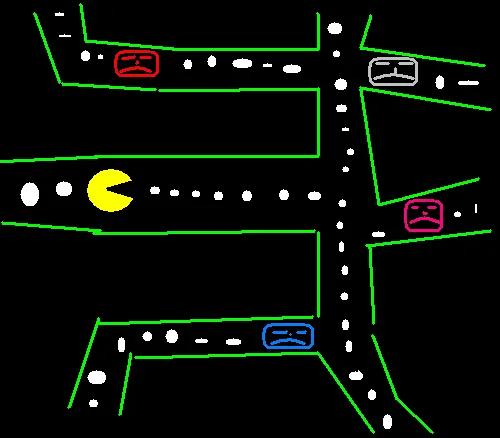
Pac-Man
The most recognisable screen in arcade history — a design so simple it crossed every border and every medium.
Open the archive →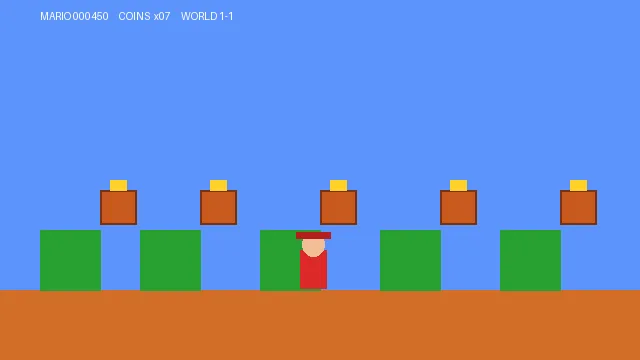
Super Mario Bros.
Rescued the home console after the 1983 crash and wrote the side-scrolling template every platformer still follows.
Open the archive →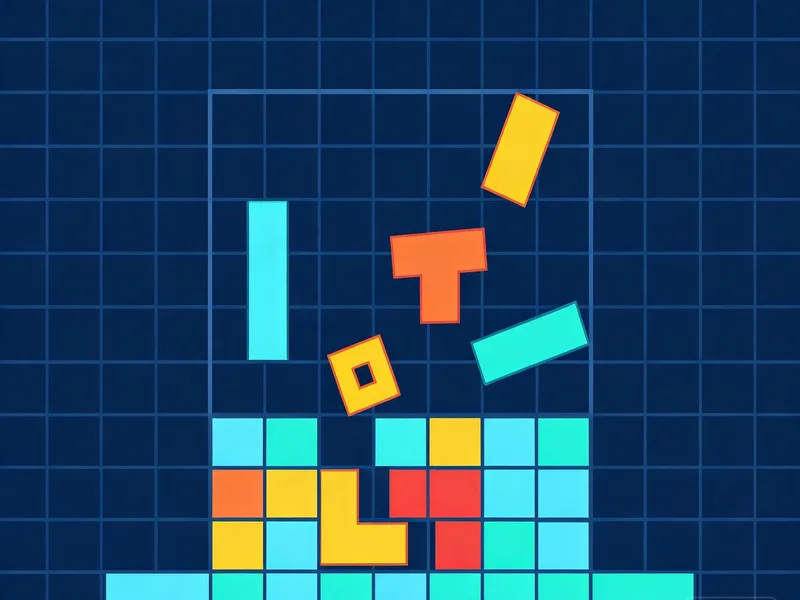
Tetris
Pure puzzle perfection: no story, no sprites needing spritesheets of heroes — and it travels to every device ever made.
Open the archive →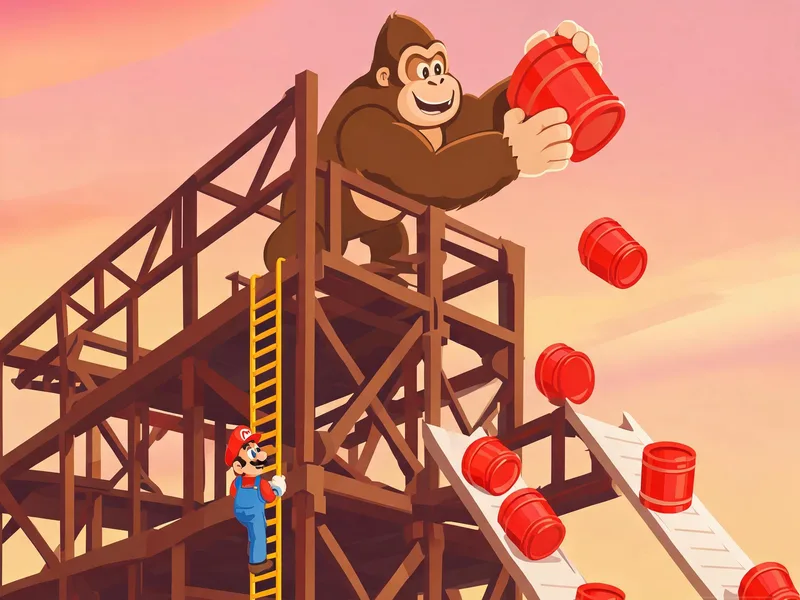
Donkey Kong
Mario’s first appearance and the game that proved a cabinet could tell a story with a climbing rhythm.
Open the archive →
Castlevania
Whip physics, sub-weapon pickups and a castle to explore — the seed that later grew into the Metroidvania genre.
Open the archive →1990s — THE FIVE THAT STILL DEFINE IT
Sonic the Hedgehog
Speed as a brand: the mascot that carried Sega into the console war and made momentum the mechanic.
Open the archive →
Street Fighter II
Turned the arcade into a competitive arena — six buttons, head-to-head, and the roots of esports.
Open the archive →
Doom
The FPS blueprint and the first great modding culture; its network play taught a generation what a deathmatch was.
Open the archive →
Pokémon Red and Blue
The link cable turned trading into a schoolyard economy — the biggest social game of the decade.
Open the archive →
The Legend of Zelda: Ocarina of Time
The 3D action-adventure dictionary: lock-on targeting and context buttons that every 3D game still borrows.
Open the archive →2000s — THE FIVE THAT STILL DEFINE IT
The Sims
Widened gaming beyond “gamers” — the best-selling PC game of its era was a dollhouse with a budget sheet.
Open the archive →
Halo: Combat Evolved
Made the console shooter feel right: two sticks, regenerating shields, and living-room LAN nights.
Open the archive →
Grand Theft Auto: San Andreas
Open-world scale as satire — three cities, a radio dial and a sandbox that defined the decade’s ambitions.
Open the archive →
World of Warcraft
Made MMOs mainstream: raids, guilds and subscriptions that turned a hobby into a daily ritual for millions.
Open the archive →
Wii Sports
Motion controls your grandparents actually used — the console became a family object overnight.
Open the archive →2010s — THE FIVE THAT STILL DEFINE IT
Minecraft
The best-selling game ever made: no instructions, infinite worlds, and a generation that learned to build first.
Open the archive →
Dark Souls
Made difficulty a design language — “soulslike” is now a genre named after a single game’s philosophy.
Open the archive →
Candy Crush Saga
The free-to-play mobile blueprint: episodic levels, lives and a bus-ride habit played by hundreds of millions.
Open the archive →
Pokémon GO
Put AR on the street — the rare game that changed where people walk, not just how they play.
Open the archive →
Fortnite
Battle royale plus live events: concerts, map rewrites and a game that behaves more like a place.
Open the archive →2020s — THE FIVE THAT STILL DEFINE IT
Animal Crossing: New Horizons
The pandemic’s shared refuge — island visits became the era’s way of seeing friends.
Open the archive →
Genshin Impact
Proved a free mobile-first gacha could match console production values and earn worldwide.
Open the archive →
Elden Ring
Soulslike design, open-world scale — the crossover hit that brought hardcore difficulty to the mainstream.
Open the archive →
Baldur's Gate 3
The CRPG revival: reactivity and choice so deep that every playthrough is a different story.
Open the archive →
Black Myth: Wukong
China’s first true global AAA — Journey to the West rendered with blockbuster action.
Open the archive →How well do you know the classics?
Six blurred screenshots, four choices each — the fastest way to test how much of the classic era you still recognise.
▶ Play Guess The GameGOING DEEPER
What makes a game a 'classic'
This page takes a position: a classic is a game that changed what people expect from the next one. Pac-Man made games a mass-cultural object; Super Mario Bros. made side-scrolling a language; Tetris proved a single rule could carry a whole genre; Doom made multiplayer a ritual; Minecraft made building the point.
The list spans five decades and every platform family — arcade cabinets, cartridge consoles, home computers, handhelds and phones — because 'classic' has always been about influence, not age.
How the archive is organised
Games are grouped by the decade they defined, and every card opens a full archive entry: release window, platforms, credited original artwork, a video section with real gameplay footage, and the design ideas the game passed on.
If you are hunting a specific memory, the full archive adds decade and platform filters; this page is the curated walk through it.
The arcade years and the one-more-credit rule
The 1980s classics on this page were designed around a hard economic fact: every cabinet had to win back its floor space in coins. That constraint produced the decade's signature qualities — screens readable in three seconds, difficulty that escalates without mercy, and the famous one-more-credit pull that kept players feeding machines long past their budget.
It is also why the era's heroes are so simple. Pac-Man is a yellow circle with an appetite; Space Invaders is rows of descending aliens; Donkey Kong is a barrel-throwing ape on a construction site. Simple rules, brutal execution, and a three-initial high score that turned the arcade into a competition you could watch.
Cartridges, CDs and the jump into 3D
The 1990s classics here tell a technology story as much as a design one. The 16-bit console war — SNES against Sega Genesis — pushed sprites and soundtracks to their ceiling, while the PlayStation's CD drive answered with storage that made full-motion video and orchestral scores possible.
Then the ground moved: Super Mario 64 and Tomb Raider rebuilt their genres in 3D, analog sticks became standard, and memory cards turned a weekend rental into a two-month adventure. Every 1990s entry in this archive marks one of those shifts.
Broadband, bedrooms and live worlds
The 2000s and 2010s classics share one engine: connection. Halo 2 put console shooters online, The Sims made the home computer a dollhouse, and the Wii pulled the family room into gaming with motion controls. Broadband turned play into a place — lobbies, clans and patch notes became part of the vocabulary.
Minecraft closed the loop and opened another: a game with no ending, maintained for over a decade, that is still the best-selling title in this archive. The modern entries show the same pattern in different clothes — games as ongoing worlds rather than finished products.