GENERATION GUIDE
What Generation Am I?
Two ways to answer it: the birth-year chart below gives the textbook answer, and the games you grew up with give the honest one. Compare the three kid profiles, then let the quiz read your memories.
GENERATION BIRTH-YEAR RANGES
THE THREE KID PROFILES
Birth years start the conversation; memories finish it. These three profiles show what each gaming childhood actually looked like.
1980s Kid
Cartridges, arcade tokens and a CRT that hummed: an 80s childhood was measured in high scores and swapped game tips in the schoolyard.
Pac-Man, Space Invaders and Street Fighter cabinets turned snack bars and cinemas into gaming halls. A high score with three initials was genuine social currency.
The Atari 2600, the Famicom and later the NES made swappable cartridges a household object. Blowing into a cartridge was a trusted repair technique.
Games were short, brutally difficult and learned by playground rumour. There were no tutorials — you experimented, died and tried again.
Signature games: Super Mario Bros., Pac-Man, Tetris and Dragon Quest defined the decade's play.
Browse the 1980s archive →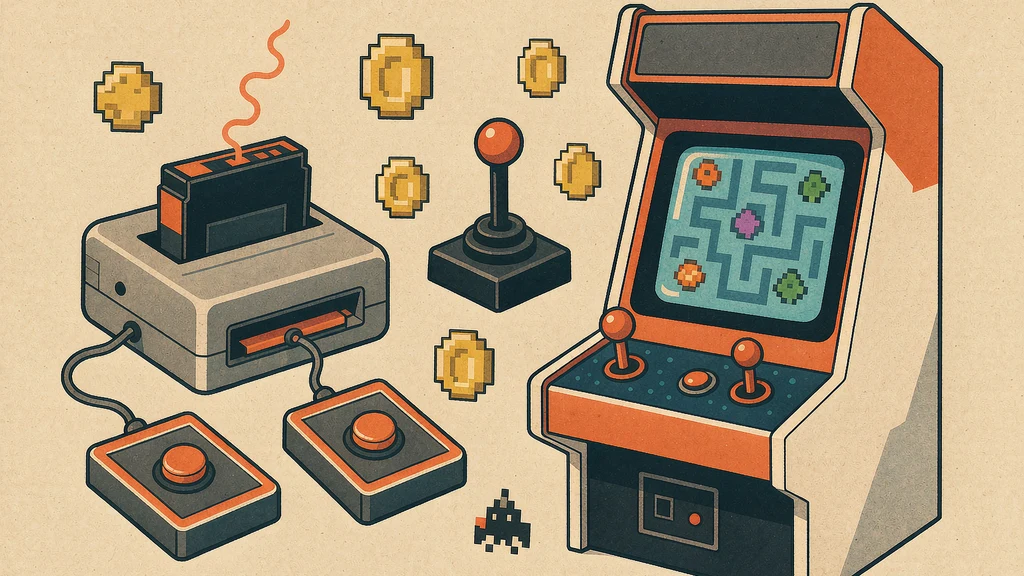
1990s Kid
Cartridges in a pencil case, a Game Boy under the desk and the first 3D worlds: a 90s childhood was when games went everywhere with you.
The Game Boy made gaming a playground staple, and Pokémon turned trading into a social ritual. Link cables carried friendships as surely as the games did.
The SNES and Sega Genesis defined 16-bit rivalry, then the PlayStation and Nintendo 64 pushed games into 3D worlds with analog sticks and CD-ROMs.
Final Fantasy VII and Tomb Raider proved games could tell epic stories. Memory cards saved progress, and a whole generation learned what a save point was.
Signature games: Super Mario World, Pokémon Red and Blue, Final Fantasy VII, Tomb Raider and Sonic the Hedgehog shaped a generation's imagination.
Browse the 1990s archive →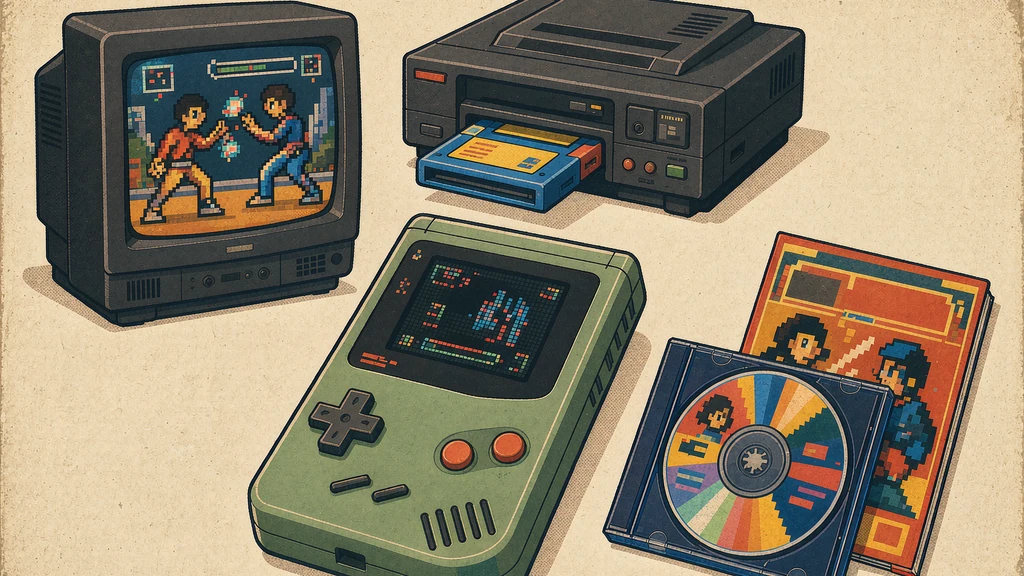
2000s Kid
Dual screens, broadband and split-screen sofas: for 2000s kids, gaming became both social at home and portable on the school bus.
PlayStation 2 became the best-selling console of all time and doubled as the family DVD player. GTA III and Halo set new expectations for open worlds and shooters.
Broadband turned consoles and PCs into meeting places. LAN nights, online lobbies and browser games made play a place you went after school.
The Nintendo DS and PSP carried games onto trains and holidays. A memory card or a GBA cartridge was treasure you guarded carefully.
Signature games: Halo, The Sims, Monster Hunter hunts with friends and the online worlds of MapleStory and Kart Rider made gaming a shared language.
Browse the 2000s archive →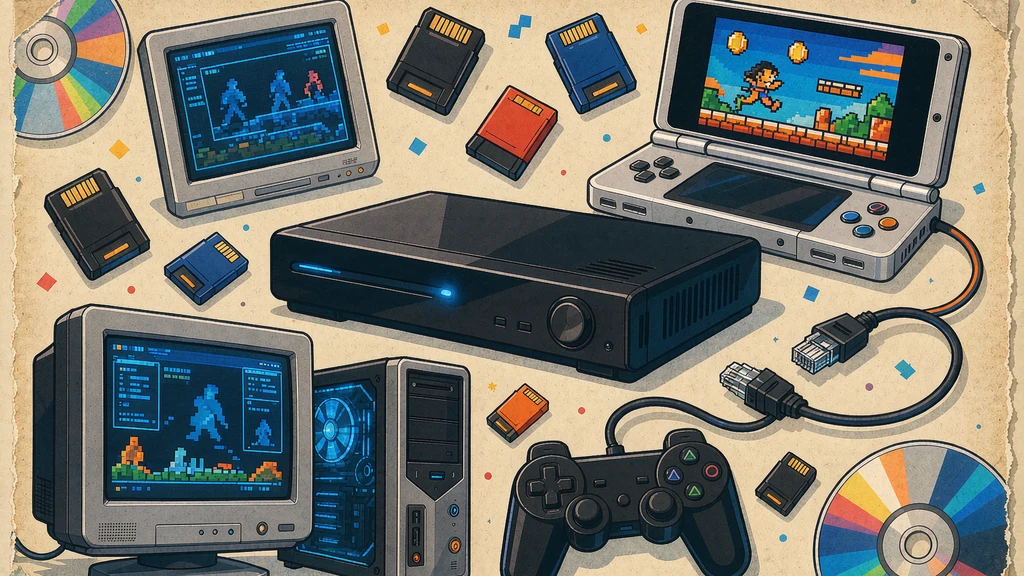
So — which generation are you?
Take the free quiz: twelve questions about the games and machines you remember, no birth date required. The result names your gaming generation and shows your full decade mix.
Frequently asked questions
What generation am I?
Match your birth year to the commonly used ranges: Gen Alpha 2013 and later, Gen Z 1997–2012, Millennials 1981–1996, Gen X 1965–1980, Baby Boomers 1946–1964. WhichDecade adds a memory-based twist: the games and machines you actually grew up with often say more than your birth year.
What generation am I if I was born in 1995?
By the standard ranges, 1995 makes you a Millennial (1981–1996). But if your first console was a Game Boy and your school memories are Pokémon trades, your gaming memories lean 1990s kid.
Am I Gen Z or a millennial?
If you got your first smartphone as a teenager and your first console was a Wii, DS or Xbox 360, you are on the Gen Z side of the line. If you remember dial-up, VHS tapes and a cartridge-blowing ritual, you lean millennial.
What generation is my kid in?
Children born from 2013 onward are usually called Gen Alpha — the first generation raised entirely on touchscreens and cross-platform games. Our Gen Z guide covers the 1997–2012 window.
How does the quiz decide my generation?
It never asks for your birth date. Twelve questions about the games, consoles and gadgets you recognise are weighted by the era each object belonged to, producing a decade profile and a generation label. It runs entirely in your browser.
GOING DEEPER
Birth years vs. gaming memories
The textbook answer comes from birth-year ranges: Gen Alpha 2013 and later, Gen Z 1997–2012, Millennials 1981–1996, Gen X 1965–1980, Baby Boomers 1946–1964. The ranges are tidy, but anyone who has argued with a sibling about whose childhood it was knows they are only half the story.
Gaming memories fill the other half. A person born in 1996 who grew up on an older cousin's Game Boy carries a 1990s childhood; a person born in 1982 whose first console was a PlayStation carries a 1990s one too. The machines and games in a household set the clock as often as the calendar does.
Three kid profiles, one archive
This page merges the old 80s, 90s and 2000s kid guides into one comparison. Each profile lists the machines, the signature games and the habits that defined that childhood: the 1980s kid splitting time between an arcade cabinet and a cartridge console, the 1990s kid trading Pokémon in the playground, the 2000s kid carrying a DS on the school bus.
Every profile links into the full decade archive — release dates, platforms and credited images for each landmark title — so the comparison can go as deep as you want.
How the quiz names your generation
The I Know Your Age quiz never asks for a birth date. It weighs twelve answers about the games, consoles and gadgets you recognise by the era each object belonged to, then names the generation your memories point to and shows the full five-decade mix.
If the result disagrees with your birth-year answer, that is the interesting outcome: it usually means you grew up with hand-me-down hardware, an older sibling's library, or a household that skipped a generation of machines.